Drain field repair and replacement in Idaho
Soggy ground, a smell in the yard or a system that backs up soon after pumping. We find out why before we recommend a fix.
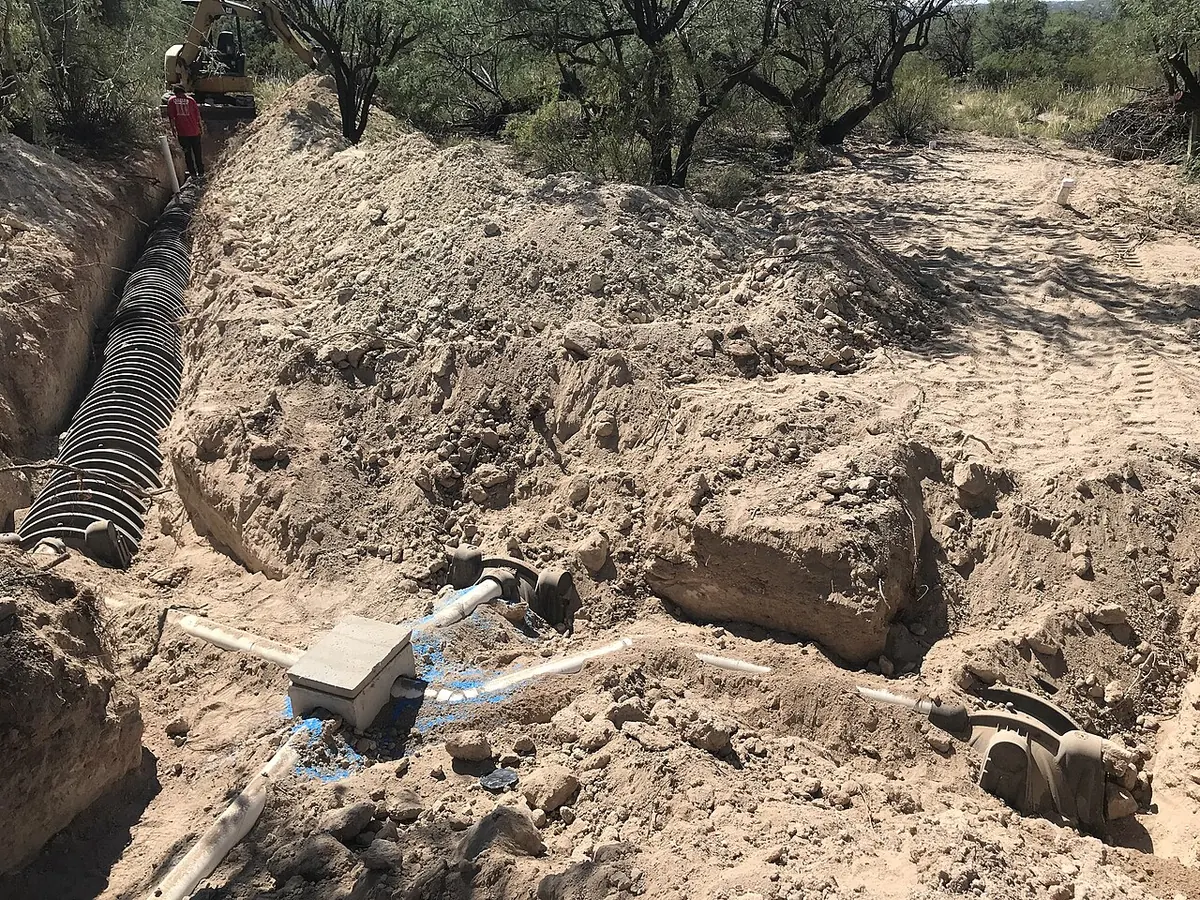
Your drain field may be failing if
- The ground over the lines stays wet or spongy
- Drains back up again soon after a pump-out
- There's a sewage smell in the yard
- Grass is bright green in stripes over the trenches
Not sure? Describe what you're seeing and we'll tell you on the call back.
What happens on a drain field visit
We work out what’s wrong first. Here’s what the technician does, in order.
- 1
Check the tank
Open the tank and look at the liquid level, the baffles and the filter for signs that solids are escaping.
- 2
Trace the lines
Open the distribution box and follow the pipes to find breaks, roots or blockages.
- 3
Test the field
Probe the trenches to see where the soil is saturated and how much of the field is affected.
- 4
Tell you the options
Explain what failed and why, and whether it can be repaired or needs replacing, with the permit steps if it does.
Why the drain field matters
The drain field is where your septic system actually gets rid of water. The tank only separates solids from liquid. Everything that leaves the tank trickles out through perforated pipes into gravel or chambers, and then into the soil, which filters it before it reaches groundwater.
When that soil stops taking water, the water has to go somewhere. It rises to the surface of the yard or backs up into the house. A drain field that has started to fail rarely fixes itself, and the longer it runs in that state, the more of it is lost. Catching it early is often the difference between a repair and a full replacement.
That’s why we start with a diagnosis, not a quote for a new field. Some problems that look like a dead drain field turn out to be a crushed pipe, a tilted distribution box or a failed pump, and those are far smaller jobs.
Repair or replace?
Often repairable:
- A crushed or broken pipe between the tank and the field
- A distribution box that has tilted or settled
- Roots in one line
- A failed effluent pump or float
- A clogged effluent filter
Usually needs replacing:
- Soil clogged with solids along the whole field
- Water surfacing even after the tank is pumped
- A field that is too small for how the home is used today
- A field sitting in groundwater part of the year
Fix the cause, not just the soggy patch, or a new drain field fails the same way.
What affects the job
No two drain fields fail the same way, so we confirm the price with you on the call back, before any work starts. These are the things we’ll ask about.
What failed
A broken pipe or a tilted box is a small repair. Soil clogged with solids means a new field.
Field size and type
Longer trenches, beds and pressure-dosed systems take more time and material.
Soil and site
Shallow soil, rock or high groundwater can mean a sand mound or extra treatment.
Permit and records
A replacement needs a health district permit and site evaluation. Old permit drawings help.
Access and landscaping
Fences, trees, patios and slopes change how the equipment reaches the field.
Season
Frozen ground and spring saturation affect when digging and testing can happen.
You get the price before any digging starts.
A homeowner's guide to drain field problems
How to spot a failing field, why fields fail, and what a repair or replacement involves in Idaho.
Signs your drain field is failing
A drain field usually fails slowly, and the first signs show up outside before they show up in the house:
- Soggy or spongy ground over the drain lines, even when it hasn't rained.
- Bright green stripes of grass following the trenches while the rest of the lawn is brown.
- Standing water or a sewage smell in the yard, often near the lowest end of the field.
- Slow drains and gurgling across the house, especially after laundry or showers.
- Backups that come back soon after pumping. This is the clearest sign. Pumping empties the tank, but if the field can't take water, the tank fills to the outlet again within days or weeks.
- A pump alarm that keeps going off on a system with a pump tank.
If you see wet ground and sewage at the surface, keep children and pets away from it and cut back on water use until we've had a look. Surfacing effluent carries bacteria and should be treated as a health problem, not just a soggy lawn.
Why drain fields fail
A drain field is designed to last for decades. When one fails early, it's usually for one of these reasons:
- Solids from the tank. When a tank goes too long without pumping, or a baffle breaks, sludge and grease flow into the field. They seal the bottom of the trenches with a black layer called biomat, and the soil can no longer absorb water.
- Too much water. A field is sized for a certain daily flow. Leaky toilets, a water softener that backwashes into the tank, several loads of laundry in one day, or a home that has added bedrooms and people can push more water through than the soil can handle. Engineers call this hydraulic overload.
- Compaction. Driving, parking, building a shed or storing heavy equipment over the field squeezes the air out of the soil and can crush pipes.
- Roots. Trees and shrubs find the water and grow into the pipes and trenches.
- High groundwater. If the water table rises into the bottom of the trenches, there is no unsaturated soil left to treat or absorb the effluent.
Knowing which of these caused the failure matters, because a new field put in without fixing the cause will fail the same way.
How we diagnose a drain field problem
Before we recommend any repair, we work out what is actually wrong. On a diagnostic visit, the technician will usually:
- Open and check the tank. The liquid level tells a lot. If it's above the outlet, water isn't leaving. We also look at the baffles and the effluent filter, and whether solids have been escaping.
- Find and open the distribution box to see if it's level, blocked, or sending all the water down one line.
- Check the lines between the tank and the field, to find crushed sections, roots or separated joints.
- Probe the field to see where the trenches are saturated and how far the problem has spread.
- Ask about water use: how many people live in the house, the laundry routine, the water softener, and any recent changes.
- Pull the records from your health district if they exist, so we know the original design, size and depth.
You get a plain answer: what's wrong, whether it can be repaired, and what we recommend. See septic inspections if you want a full written report.
Replacing a drain field in Idaho
In Idaho, septic systems are permitted by the seven regional public health districts under the state rules, IDAPA 58.01.03. Replacing a drain field is treated much like installing a new one: it needs a permit from your health district before work starts.
The process usually looks like this:
- Site evaluation. A health district specialist looks at the soil, often in test holes dug on the property, to check the soil type and the depth to groundwater or bedrock.
- Permit and design. The district sets what kind of system the site needs and where it can go. The new field usually goes in a different area of the yard, called the replacement area, so the old trenches can be left in place.
- Installation. We dig the trenches or bed, place the pipe and gravel or chambers, and connect the tank.
- Inspection. The health district inspects the work. Eastern Idaho Public Health, for example, requires tanks and drain fields to be inspected before they're covered, so we plan the job around that visit.
We handle the scheduling with you and tell you on the call back what your district will expect. See new septic installation for more on the permit process.
When a standard drain field won't fit
A conventional gravity drain field needs enough depth of suitable soil above groundwater and rock. Many Idaho lots don't have it: shallow soil over basalt, a high water table near rivers, heavy clay, or a small lot that has been built up over the years. In those cases the health district can require an alternative system. The common ones are:
- Pressure distribution. A pump in a separate tank doses effluent through small pipes, spreading it evenly over the whole field instead of flooding the first part of each trench. It works well on marginal soil and long trenches.
- Sand mound. The drain field is built above the natural ground in a bed of sand, giving the effluent the treatment depth the native soil can't provide.
- Intermittent sand filter. Effluent is dosed onto a sand bed that cleans it before it goes to a smaller drain field.
- Extended treatment package system. A manufactured unit that adds air and bacteria to treat the effluent further before it reaches the soil. These are often used where groundwater is shallow or where nitrate is a concern.
Alternative systems have pumps, floats and alarms that need regular attention, so ask us about maintenance when we discuss the options.
Spring snowmelt and seasonal saturation
Across much of Idaho, drain fields have a hard time in spring. Snowmelt and spring rain soak the ground, and in river valleys and low spots the water table rises for weeks at a time. A field that copes fine in August can be sitting in wet soil in April.
Idaho's rules recognize this. When a site is evaluated, the health district looks for the seasonal high groundwater, the highest level the water table reaches each year, from soil color patterns, monitoring or local records. The drain field has to sit far enough above it.
If your yard goes soggy every spring and dries out in summer, it doesn't always mean the field is finished. It may be an older system placed too close to the seasonal water table. A few things help:
- Spread laundry and long showers out during the wettest weeks.
- Send roof gutters and sump pumps away from the field.
- Keep snow piles and vehicles off the field all winter.
- Have the tank pumped in fall so the system enters spring with room to spare.
If the problem comes back every year, a raised or pressure-dosed system may be the long-term answer.
Where the drain field fits in your system
The drain field is step four of five. Tap each part to see how the whole system works.
Signs this part needs attention
Drain field repair across Idaho
Drain field checks, repairs and replacements from the Panhandle to eastern Idaho. Pick your area for local permit and soil notes.
Drain field questions
Can’t find yours? Call and ask. There’s no charge for a question.
Can a failing drain field be repaired, or does it always need replacing?
It depends on the cause. Broken pipes, a tilted distribution box, roots in one line or a failed pump can usually be repaired. If the soil along the whole field is clogged with solids, the field normally has to be replaced. We diagnose the problem first and tell you which it is.
Will pumping the tank fix my drain field?
Pumping gives the system short-term room, and it should always be part of the fix. But if the field itself is clogged, the tank will fill back up to the outlet soon after, and the wet ground will return.
Do I need a permit to repair or replace a drain field in Idaho?
Replacing a drain field, or making a major repair, needs a permit from your regional health district, and usually a site evaluation. Small repairs, such as a new lid or riser, typically don't. We tell you what your district expects when we call back.
Can the new drain field go in the same spot as the old one?
Usually it goes in a separate replacement area, so the new trenches are in fresh soil. Where space is tight, the health district decides what is allowed on your lot.
What is a sand mound, and will I need one?
A sand mound is a drain field built above the natural ground in a bed of sand. It's used where the soil is too shallow, or the groundwater too high, for a standard field. The health district's site evaluation decides whether your lot needs one.
How long does a drain field replacement take?
The digging and installation usually take a few days. The permit, site evaluation and inspection add time before and during the job, so the full process takes longer. We give you a realistic schedule on the call back.
Do septic additives or enzymes clear a clogged drain field?
We don't recommend them. They don't remove the solids that seal the soil, and some can push more sludge out of the tank. Finding and fixing the cause is what restores the field.
Why is my yard wet over the drain field only in spring?
Snowmelt and spring rain can raise the water table close to the trenches, so the soil has nowhere to send the water. If it clears up by summer, the field may be working but sitting too close to the seasonal high groundwater. We can check it and talk through the options.
Can I drive or build over my drain field?
No. Vehicles and structures compact the soil and can crush the pipes. Keep the field covered with grass and clear of parking, sheds, pools and patios.
Book a drain field check
Send the details and we’ll call you back to confirm a price and a time. Prefer to talk? Call (208) 555-0100.
- Free to ask, no obligation
- A price before any work starts
- Backups and alarms handled first
Request a call back
Takes about a minute.
By submitting, you agree that Reliable Septic Systems and its local service partners may contact you by phone, text or email about your request. Message and data rates may apply; message frequency varies. Reply STOP to opt out. See our Privacy Policy and Terms.