Septic system repair in Idaho
We find out what actually failed, fix that part, and tell you up front whether the job needs a health district permit.
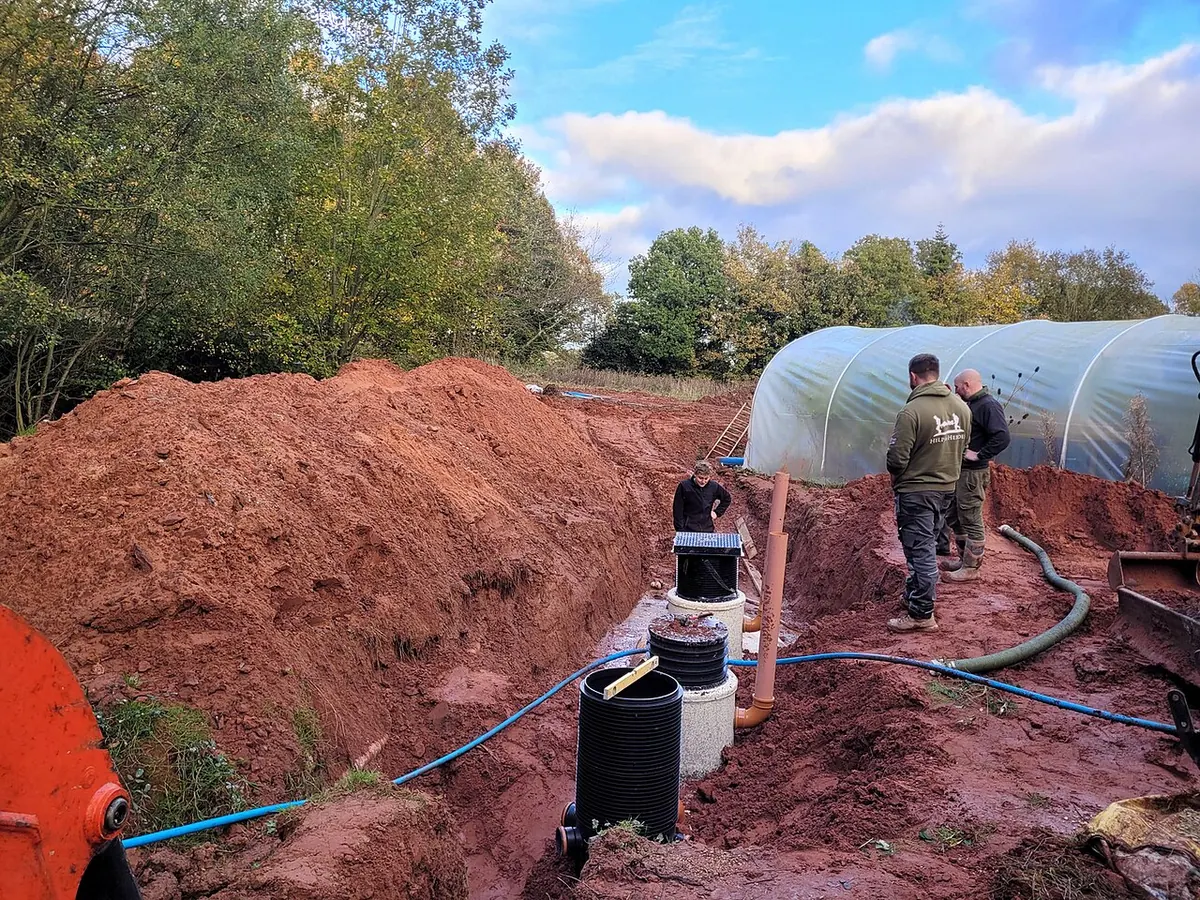
You probably need a repair if
- Your septic alarm is going off
- Backups keep coming back after the line is cleared
- A lid is cracked, rusted or missing
- There's a wet spot or sinkhole between the house and the tank
Not sure? Describe what you're seeing and we'll tell you on the call back.
What happens on a repair
Here’s how a repair visit runs, from the first question to the finished job.
- 1
Find the cause
Locate the tank and lines, then trace the problem with a pump-out, a look at the pipes or a test of the pump and floats.
- 2
Explain the fix
Tell you what failed, what the repair involves, and whether it needs a permit, before any work starts.
- 3
Make the repair
Replace the failed part with as little digging as possible, and put your yard back afterwards.
- 4
Check it works
Run water through the system to confirm the fix, and note anything else worth watching.
Why small repairs matter
Most septic repairs start small: a baffle that rusted off, a pipe that settled and cracked, a pump float that stuck. Left alone, each of those lets solids or water go where they shouldn’t, and the damage moves further down the line toward the drain field.
The drain field is the part you least want to replace. A broken outlet baffle fixed this month might cost a fraction of what a clogged drain field costs next year. That’s why we find the cause first and fix the part that actually failed, not the whole system.
Does my repair need a permit?
Under Idaho's septic rules (IDAPA 58.01.03), you can usually fix these without a permit:
- Clogged or broken solid pipe
- A failed pump, float, alarm or other electrical or mechanical part
These usually need a permit from your health district first:
- Replacing a tank or the drain field
- Any repair that enlarges the system
- Fixing a system that is failing, with sewage surfacing or backing up
We'll tell you which applies before work starts.
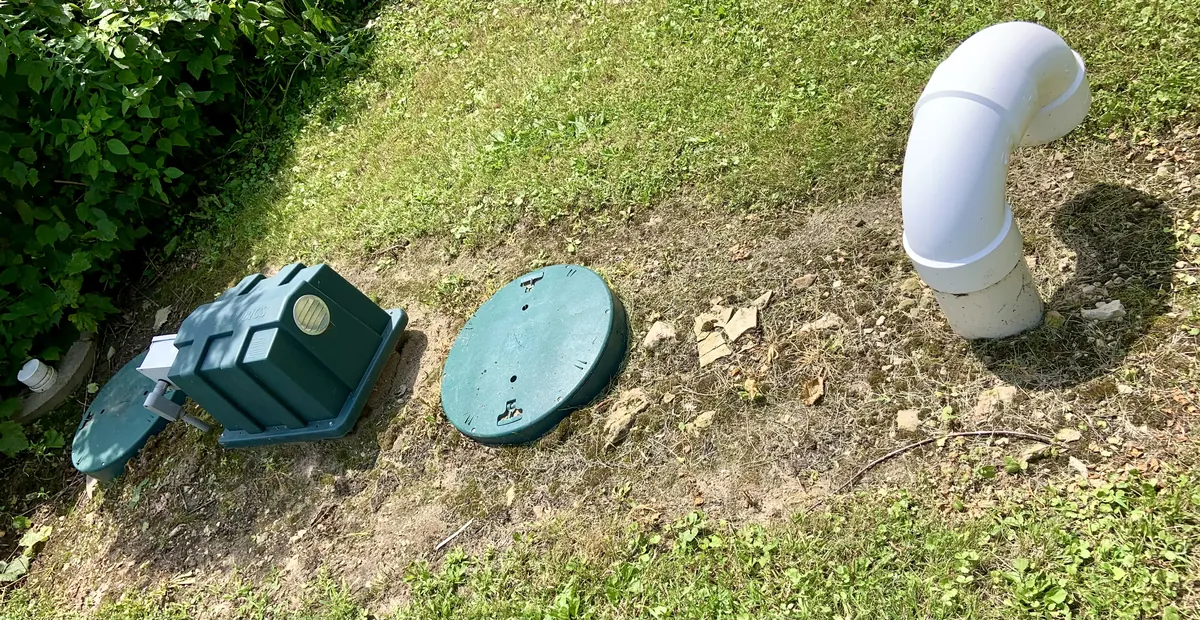
Fix the small part that failed, and the drain field never has to pay for it.
What affects the job
Every repair is different, so we confirm the price with you on the call back, before any work starts. These are the things we’ll ask about.
Depth and digging
Deep lines, rocky ground and pipes under paths or driveways take more work to reach.
Which part failed
A baffle or float is a quick swap. A long run of crushed pipe is a bigger job.
Pumps and electrics
Pump systems may need a new pump, floats, alarm or control panel.
Roots
Roots have to be cleared and the entry point repaired so they don't grow back.
Permits
Tank or drain field work needs a health district permit, which adds time.
Season
Frozen ground slows digging. Some larger repairs are best planned for a thaw.
You get the price before anyone starts digging.
A homeowner's guide to septic repairs
The repairs we make most often, what causes them, and when the health district gets involved.
Broken or missing baffles
A baffle is a short wall or pipe fitting at the inlet and outlet of the tank. The inlet baffle slows incoming wastewater so it doesn't stir up the sludge. The outlet baffle holds back the floating scum so only the clearer liquid flows on to the drain field.
Older concrete baffles crumble from the gases inside the tank, and steel ones rust away. When the outlet baffle goes, grease and solids flow straight into the drain field pipes, and that's how many drain fields are ruined.
The fix is usually simple: the tank is pumped, the old baffle is removed, and a new PVC baffle or sanitary tee is fitted. If the tank has an effluent filter housing, we can often fit one at the same time. It catches solids that would otherwise slip through and only needs rinsing at each pump-out.
Baffles are checked at every pump-out we do, so a missing one is usually found before it causes real damage.
Cracked, crushed or separated pipes
Two pipes matter most: the sewer line from the house to the tank, and the line from the tank to the distribution box or drain field.
They fail in a few common ways. Vehicles driven or parked over shallow lines crush them. Frost heave lifts and drops the ground through an Idaho winter, pulling joints apart or tilting the distribution box so one drain line gets all the water. Settling after construction leaves a sag in the line where solids collect and block it.
Signs include a backup that comes back soon after the line is cleared, a sinkhole or wet spot between the house and the tank, or a tank that's low even though the house is in use. We find the break, dig only where we need to, and replace the damaged section. A tilted distribution box can usually be leveled or replaced in the same visit.
Effluent pumps and high-water alarms
Not every system works on gravity alone. If the drain field is uphill from the tank, or the system uses a pressure-dosed field or a mound, a pump in a separate tank or chamber pushes the effluent out. A float switches the pump on and off, and a second float sets off a high-water alarm if the level gets too high.
When the alarm goes off, cut back on water straight away. The pump tank has a little reserve space, but not much. Check that the pump's breaker hasn't tripped, then call us.
Common causes are a failed pump, a float tangled or stuck in the wrong position, a tripped breaker or a burnt-out control panel. We test each part and replace only the one that failed. An alarm that sounds after heavy rain or snowmelt can also mean groundwater is getting into the tank, which is worth knowing about before spring.
Risers, lids and access
Many tanks were installed with their lids a foot or more below ground. Every pump-out or repair then starts with a shovel, and lids are easy to lose under a lawn or a garden bed.
A riser is a plastic or concrete collar that brings the tank opening up to ground level, capped with a secure lid. It makes every future visit faster, lets you find the tank under snow, and makes it easy to check the filter yourself.
Lids also wear out. A cracked or rusted lid is a real safety hazard, since a child or pet can fall into a septic tank, and it lets rainwater and snowmelt in. If a lid flexes when you step near it, keep people off it and call us. We replace damaged lids with secure ones and fit risers on the same visit.
Tree roots in the system
Roots follow water and nutrients, and a septic line is full of both. They get in through joints, cracks and tank seams, then grow into a mat that blocks the pipe. Willows, poplars, cottonwoods and aspens are some of the worst offenders, and fast-growing ornamental trees planted too close to the tank cause plenty of trouble too.
Roots in the line usually show up as slow drains or a backup that clears and then comes back. We clear the line, look for the point where the roots got in, and repair the joint or the section of pipe so they can't simply grow back.
Clearing roots without fixing the entry point is a short-term fix. If a tree is right on top of the line, the only lasting answer may be to reroute the pipe or remove the tree. We'll tell you the options and let you decide.
When a repair needs a health district permit
Idaho's septic rules (IDAPA 58.01.03) say no one may modify, repair, expand or install a septic system without a valid installation permit, with a few exceptions. The main one for homeowners: repairs needed because of clogged or broken solid piping, or a malfunction in an electrical or mechanical part, can be made without a permit, as long as the repair doesn't expand the system.
In practice, that covers most pipe sections, pumps, floats and alarms. Replacing a tank, replacing or enlarging a drain field, or adding to the system needs a permit from your regional health district first.
The rules also define a failing system as one that won't accept wastewater, or that discharges it onto the ground or into water. If your system is failing, the owner is required to get a permit and repair it as soon as practical. We'll tell you on the call back if your job looks like it needs a permit, and what the district will want to see.
Where septic repairs usually happen
Most repairs are between the house and the drain field. Tap each part to see what goes wrong and the signs to watch for.
Signs this part needs attention
Septic repair across Idaho
Repairs from the Panhandle to the Magic Valley. Pick your area for local permit and soil notes.
Septic repair questions
Can’t find yours? Call and ask. There’s no charge for a question.
Can a septic tank be repaired, or does it have to be replaced?
Most problems can be repaired: baffles, pipes, lids, risers, pumps and alarms. A tank with major structural cracks, or a rusted-out steel tank, is usually better replaced, which needs a permit.
Do I need a permit to repair my septic system in Idaho?
Not for fixing clogged or broken solid pipe or a failed electrical or mechanical part, as long as the system isn't enlarged. Replacing a tank or drain field, or repairing a failing system, needs a health district permit first.
My septic alarm is going off. What should I do?
Cut back on water use straight away, check that the pump's breaker hasn't tripped, and call us. The alarm means the pump tank is filling faster than it's emptying.
How do I know if the problem is the tank or the drain field?
A backup that clears after pumping and doesn't return usually points to the tank or a pipe. Soggy ground over the field, or backups that come back soon after pumping, point to the drain field.
How long does a septic repair take?
Many repairs, like a baffle, a lid or a pump, are done in a single visit. Pipe repairs depend on how deep and how far the line runs. Permitted work takes longer because the health district has to approve it first.
Can you repair a septic system in winter?
Often, yes. Frozen ground makes digging slower, but pumps, alarms, baffles and accessible lids can be fixed year-round. Larger jobs may be planned for when the ground thaws.
Will the repair tear up my yard?
We dig only where the problem is, keep the excavation as small as we can, and put the soil and turf back when we're done.
Should I use a root killer or additive instead of a repair?
No. Chemicals don't fix the crack or joint the roots came through, and some can harm the system. Clearing the roots and repairing the entry point lasts.
Book a septic repair
Send the details and we’ll call you back to confirm a price and a time. Prefer to talk? Call (208) 555-0100.
- Free to ask, no obligation
- A price before any work starts
- Backups and alarms handled first
Request a call back
Takes about a minute.
By submitting, you agree that Reliable Septic Systems and its local service partners may contact you by phone, text or email about your request. Message and data rates may apply; message frequency varies. Reply STOP to opt out. See our Privacy Policy and Terms.